

Introduction
Artificial Intelligence is no longer a future concept—it’s already shaping how we work, learn, and make decisions. From writing content to solving complex problems, AI tools are becoming part of everyday life.
But a serious question remains: Is using AI a good thing for individuals? The answer isn’t simply yes or no. It depends entirely on how you use it.
Benefits of Using AI in Daily Life
AI gives individuals an unfair advantage—if used correctly.
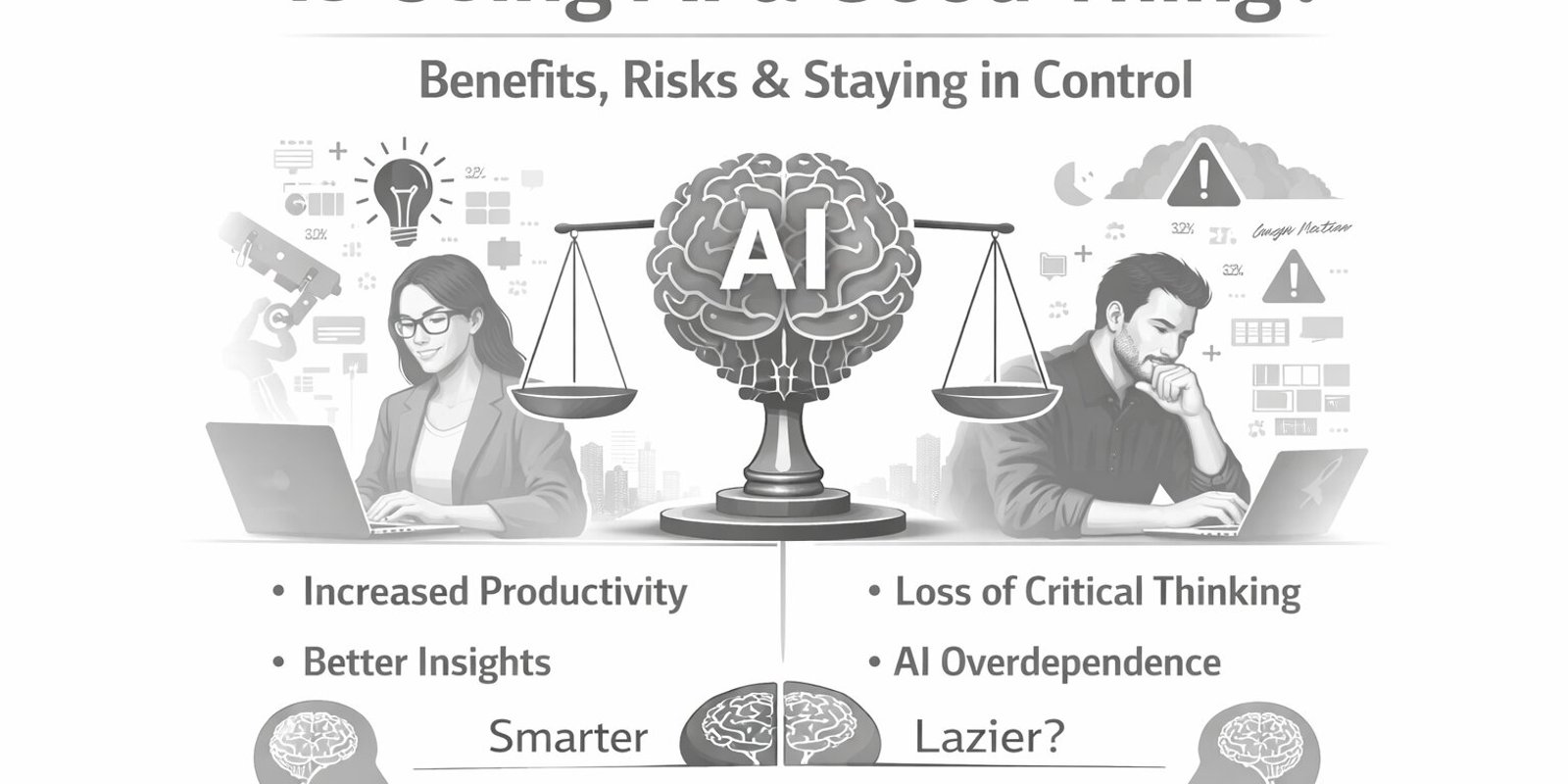
- Increased Productivity
Tasks that used to take hours can now be completed in minutes. Whether it’s writing, coding, or research, AI speeds up execution.
- Skill Accessibility
You no longer need years of training to start. AI helps bridge gaps in:
Writing Programming Design Data analysis 3. Better Decision Support
AI can process large amounts of data quickly, helping you make more informed decisions.
Bottom line: AI acts as a force multiplier for your output.
Risks of Becoming Too Dependent on AI
The downside is real—and often ignored.
- Loss of Critical Thinking
If AI does all the thinking, your ability to analyze and question weakens over time.
- Reduced Creativity
Over-reliance can make your work generic and predictable.
- Blind Trust in AI
AI is not always accurate. It can generate confident but incorrect answers.
Reality check: Convenience can reduce competence if you’re not careful.
Is AI Making Us Smarter or Lazier?
Both.
AI makes you:
Smarter, if you use it to learn and enhance your thinking Lazier, if you use it to avoid thinking altogether
The difference comes down to intent and discipline.
How to Use AI Without Losing Your Thinking Ability
This is where most people fail. Here’s the correct approach:
- Think Before You Prompt
Always form your own perspective first. Use AI to refine—not replace—your ideas.
- Use AI as an Assistant, Not an Authority
AI should support your decisions, not make them for you.
- Verify Outputs
Cross-check important information. AI can be wrong.
- Keep Practicing Core Skills
Don’t stop writing, analyzing, or solving problems manually.
Who Benefits the Most from AI?
Not the people who use AI the most—but those who use it strategically.
Winners are people who:
Combine human judgment with AI efficiency Know when to rely on AI—and when not to Maintain strong foundational skills
AI amplifies what you already are.
FAQs About Using AI Is using AI a good thing for productivity?
Yes. AI significantly improves speed and efficiency when used correctly.
Can AI reduce critical thinking skills?
Yes, if you rely on it blindly without questioning or verifying outputs.
Should everyone become AI-enabled?
Yes—but with discipline. AI should enhance your abilities, not replace them.
How can I use AI without becoming dependent?
Use it after forming your own ideas, verify results, and continue practicing core skills.
Final Verdict
Using AI is a good thing—but only if you stay in control.
It can:
Increase your speed Expand your capabilities Improve your output
But it can also:
Weaken your thinking Reduce originality Create dependency
The goal isn’t to avoid AI—it’s to use it intelligently.
Because in the long run, the people who win won’t be those who rely on AI… but those who can think clearly with or without it.